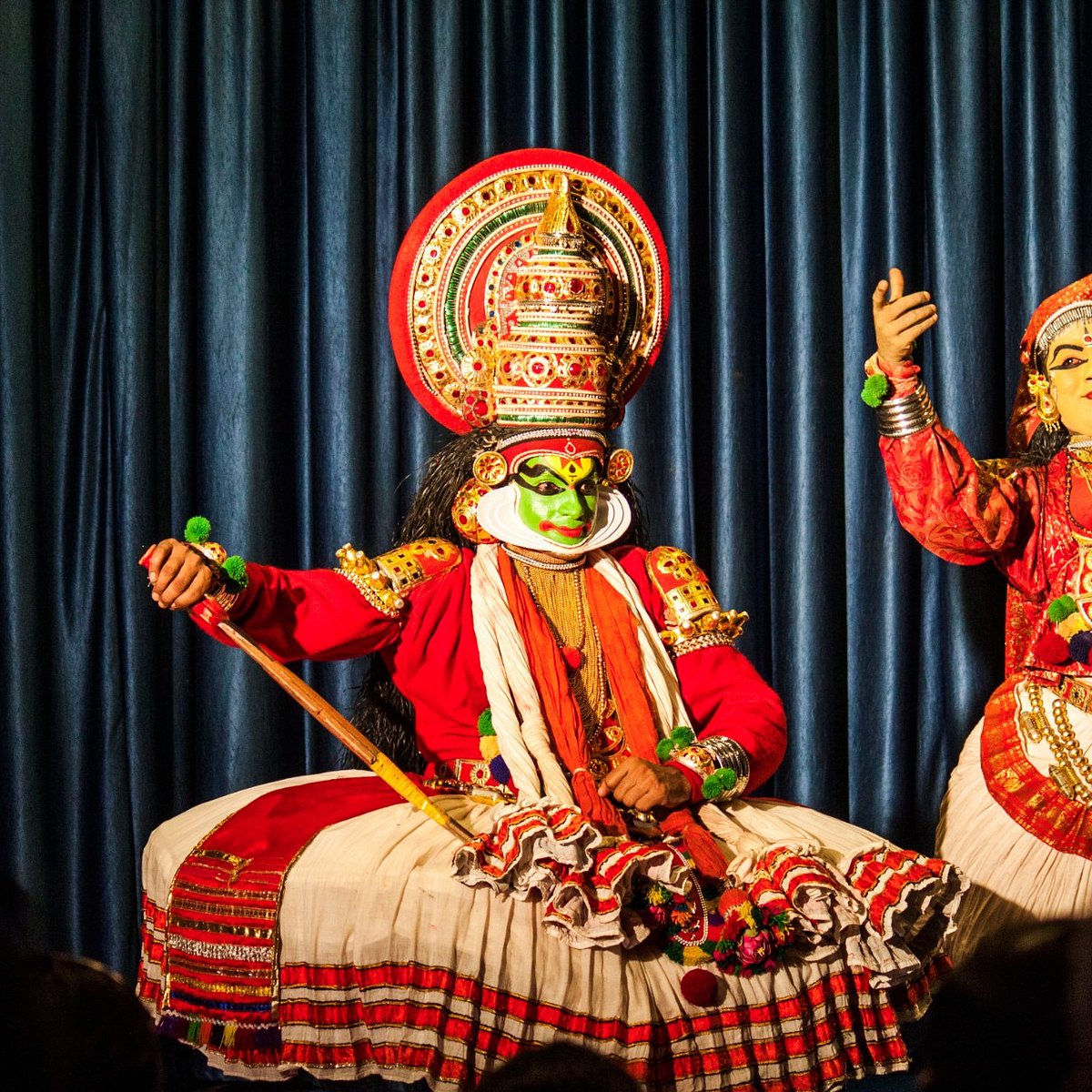
The first time I saw it was at a friend’s wedding in Kochi — and honestly, it blew me away. The colors, the faces, the intensity… it felt immersive.
But like most things I enjoy, I had zero context.
So I decided to interview one of the older practitioners to actually understand what was going on.
Kathakali comes from Kerala and it’s not just a dance — it’s basically ancient storytelling brought to life. The stories come from old Indian epics and myths, and at its heart it’s all about good vs evil, human emotions, gods, battles, and moral lessons (which I’ll get into more in a bit).
What shocked me most is the discipline behind it.
The performers start training really young and usually spend close to 10 years before they’re stage-ready. The costumes are huge and super heavy. The makeup alone takes 3–4 hours. And every color actually means something — green faces for noble heroes and gods, red marks for aggression and pride, black for demons and darker characters, plus that big white paper-looking frame around the jaw called the chutti that makes everything look extra dramatic.
And the craziest part? The eyes.
They train their eye muscles for years so they can tell entire stories just by moving them — fast side glances, slow turns, intense stares — all showing emotions without saying a word.
Now about the characters.
You usually see gods, kings, warriors, demons, and mythological heroes. The green-faced ones are the “good guys,” powerful and noble. The ones with more red and sharp designs are aggressive or arrogant. And the dark-faced ones are straight-up villains. Each look instantly tells you who’s who in the story.
Back in the day, these performances would go on all night till sunrise, lit by oil lamps. Today they’re shorter, but the intensity is still the same.
Today, there are very few Kathakali artists left. Megha said there isn’t much money in it anymore, so most of them don’t do this full-time. They perform purely out of passion — while juggling side jobs, teaching, or other work just to get by.
Something that takes years of discipline, hours of preparation, and carries centuries of culture… is now kept alive mostly by love for the art.
Which honestly made it even more special to witness.